
A Royal Residence
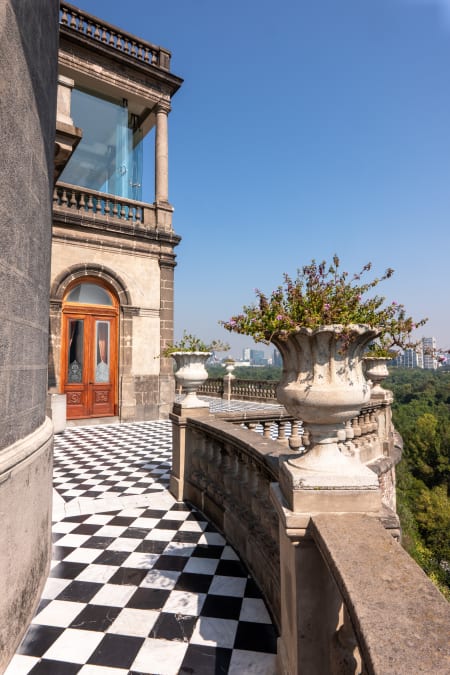
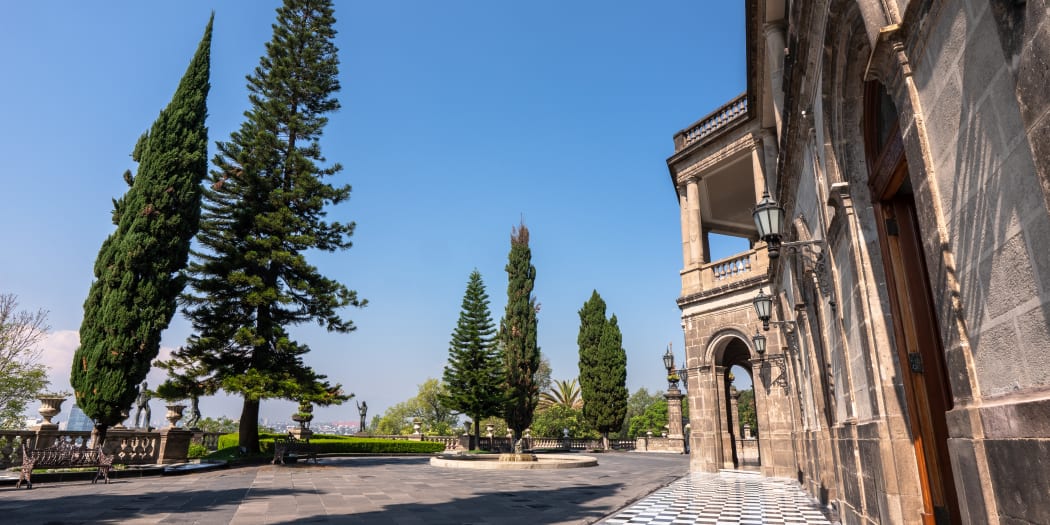
Set on a hilltop with sweeping views of the Valley of Mexico, this grand and palatial building has seen Mexico’s history unfold within its walls.
Chapultepec Castle first housed Mexico’s leader in the colonial period, when the Viceroyalty of New Spain used the building as a summer house. But it was not until the French intervention in Mexico in the 1860s that Mexico’s ruler, Emperor Maximilian von Hapsburg, transformed the castle into his grand imperial residence.
Maximilian hired a team of architects to renovate the castle. Filling it with works of art shipped from Europe, he reconstructed the castle in the style of a European royal palace.
Maximilian’s reign did not last long. In 1867, his empire was defeated by republican forces, the emperor was captured and executed, and Chapultepec Castle was left abandoned.
But the presidents of the newly restored Mexican republic would soon claim the castle as their official residence. It remained so until 1939, when the president moved to Los Pinos, a nearby building in Chapultepec Park.
The castle was then converted into the National Museum of History. The building has been open to the public ever since, filled with thousands of artifacts and epic murals that offer a fascinating retelling of Mexico’s past.
The Battle of Chapultepec
Chapultepec Castle was the site of one of the most consequential events in Mexico’s history.
In 1846, a territorial dispute over Texas’s southern border erupted into full-scale war between the United States and Mexico.
Invading U.S. troops reached as far south as Mexico City, capturing Chapultepec Castle on September 13, 1847.
At the time, the castle was being used as a military academy. Here, six young cadets died defending the castle. One reportedly leapt to his death wrapped in the Mexican flag to prevent it being captured by the invading forces.
The six fallen cadets, known as the Niños Héroes, are commemorated in Mexico to this day.
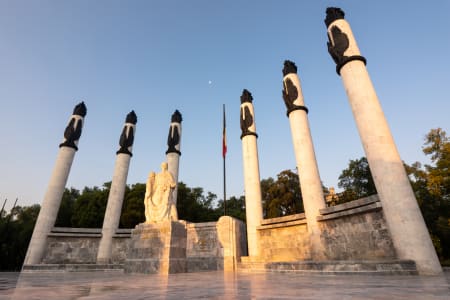
In Chapultepec Castle, a spectacular mural painted by Gabriel Flores adorns the ceiling above the staircase in the main entrance. This epic artwork depicts one of the Niños Héroes falling to his death wrapped in the Mexican flag, below Chapultepec Castle and an eagle, a symbol of the Mexican nation. And at the foot of the hill below the castle stands the imposing ‘Monumento a los Niños Héroes’, with six pillars commemorating each of the fallen children.
The signing of the Treaty of Guadalupe Hidalgo in 1848 ended the U.S. occupation of Mexico, but resulted in around 40% of Mexico’s landmass, including the present-day states of Texas, New Mexico and California, being ceded to the United States.