

Ruins of the Aztec Capital
Tenochtitlan, the capital of the Aztecs (or Mexica), was one of the world’s great metropolises, a place of wonder for the Spanish conquistadors when they first arrived in 1519.
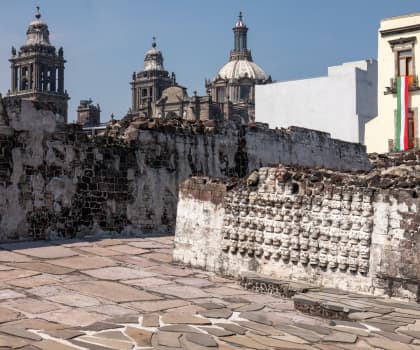
The 45-meter high pyramid of the Templo Mayor marked the center of the city as well as the central axis of the Aztec religion.
The Spanish conquest wrought vast destruction on Tenochtitlan. The Templo Mayor was leveled to the ground, with stone from the pyramid used to construct the first buildings of the new colonial capital above the ruins of the Aztec city.
But in recent decades, painstaking archaeological excavations below the center of Mexico City have uncovered the remnants of the Templo Mayor. These reveal a glimpse of the great Aztec city’s ceremonial center that once stood on the same ground occupied by the Centro Histórico today.

The Museum
The Aztecs were dedicated collectors of art.
As their armies conquered vast swathes of territory across Mexico, they brought back to Tenochtitlan a remarkable collection of works produced by the communities that they conquered.
And the Aztecs were themselves great archaeologists who were fascinated by the indigenous cultures that preceded them. They collected relics dating as far back as the Olmec, Teotihuacan and Toltec eras.
Many thousands of these artifacts were taken to the Templo Mayor to be presented as offerings to the gods. The quality of these offerings is so immense that Tenochtitlan could well be considered the global art capital of its time.
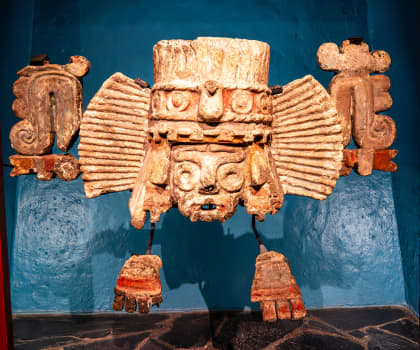
Buried below the Centro Historico, archaeologists have in recent decades discovered a wealth of art and artifacts. Many of these are now on display in the expansive Templo Mayor Museum, which offers a fascinating insight into Mexico’s pre-Columbian civilizations.