

The Story of Pre-Columbian Mexico
Mexico’s largest and most visited museum tells the story of the rise and fall of the great civilizations that inhabited this region of the Americas before the Spanish conquest. It provides a comprehensive history of these lands, broken down chronologically and geographically.
The story begins with the arrival of first humans over 30,000 years ago, before focusing on the Central Highlands region that surrounds present-day Mexico City. Here, powerful dynasties including Teotihuacán, the Toltecs and the Aztecs (Mexica) built great political and economic power bases over the centuries.
The collection then covers other regions of Mexico in geographic order. The great civilizations of the Maya, Olmecs and Zapotecs are on display, along with the indigenous groups of more remote regions in the north and west.
Finally, the upper floor of the museum explores the lives of Mexico’s indigenous peoples after the Spanish conquest, providing an insight into the communities that live across the country to this day.
A Remarkable Archaeological Collection
Some of the most impressive pre-Columbian sculptures uncovered anywhere in the Americas are on display in this museum.
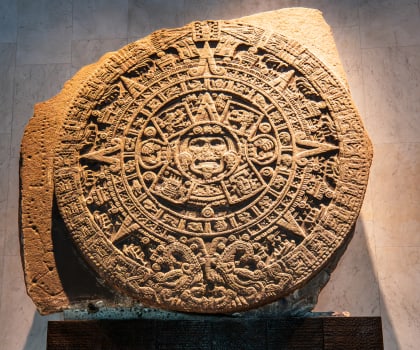
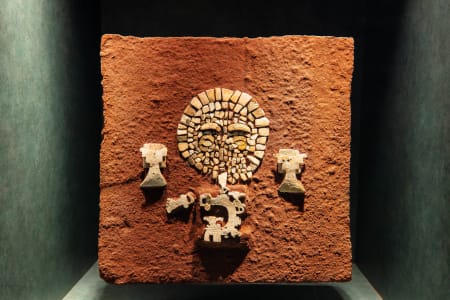
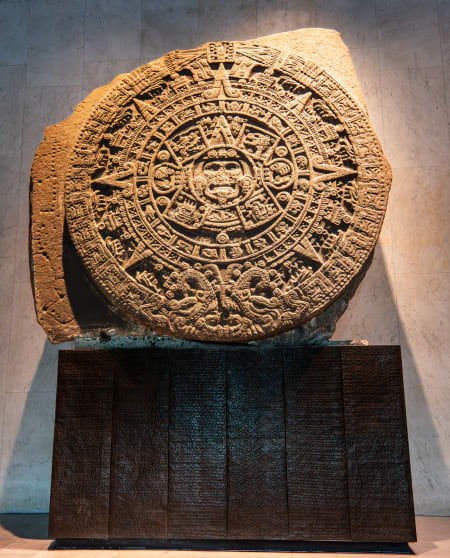
The collection dedicated to the Aztecs (Mexica) is perhaps the most outstanding. The Sun Stone is emblematic of Aztec culture and artistry. This 12-foot wide carving is covered in iconography and symbols of Aztec cosmology. There is also a giant sacrificial stone, the Stone of Tízoc, and an intricately carved sculpture of the god Coatlicue, as well as many smaller pieces of art devoted to the Aztec gods.
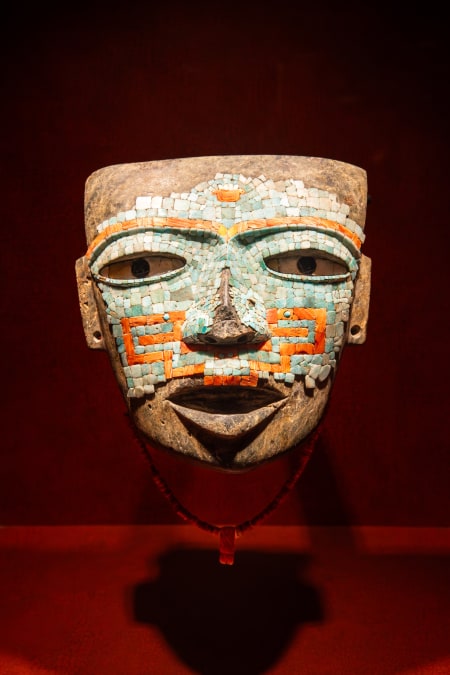
The collections dedicated to the earlier civilizations that ruled the Central Highlands are equally impressive. The Toltec exhibit features an iconic Atlante sculpture, a dramatic 15-foot tall statue of a warrior. There are also masks and obsidian carvings recovered from the ruins of Teotihuacán.
From Mexico’s regions, the Olmec artifacts from the Gulf Coast are remarkable for their age, with giant sculptures and jade carvings that are around 3,000 years old. The Maya culture is fascinating, particularly the life-size recreation of the tomb of Pakal the Great. And Oaxaca’s Mixtec codices convey the richness of indigenous Mexico’s history, art, and mythology.